
Last updated October 15, 2026
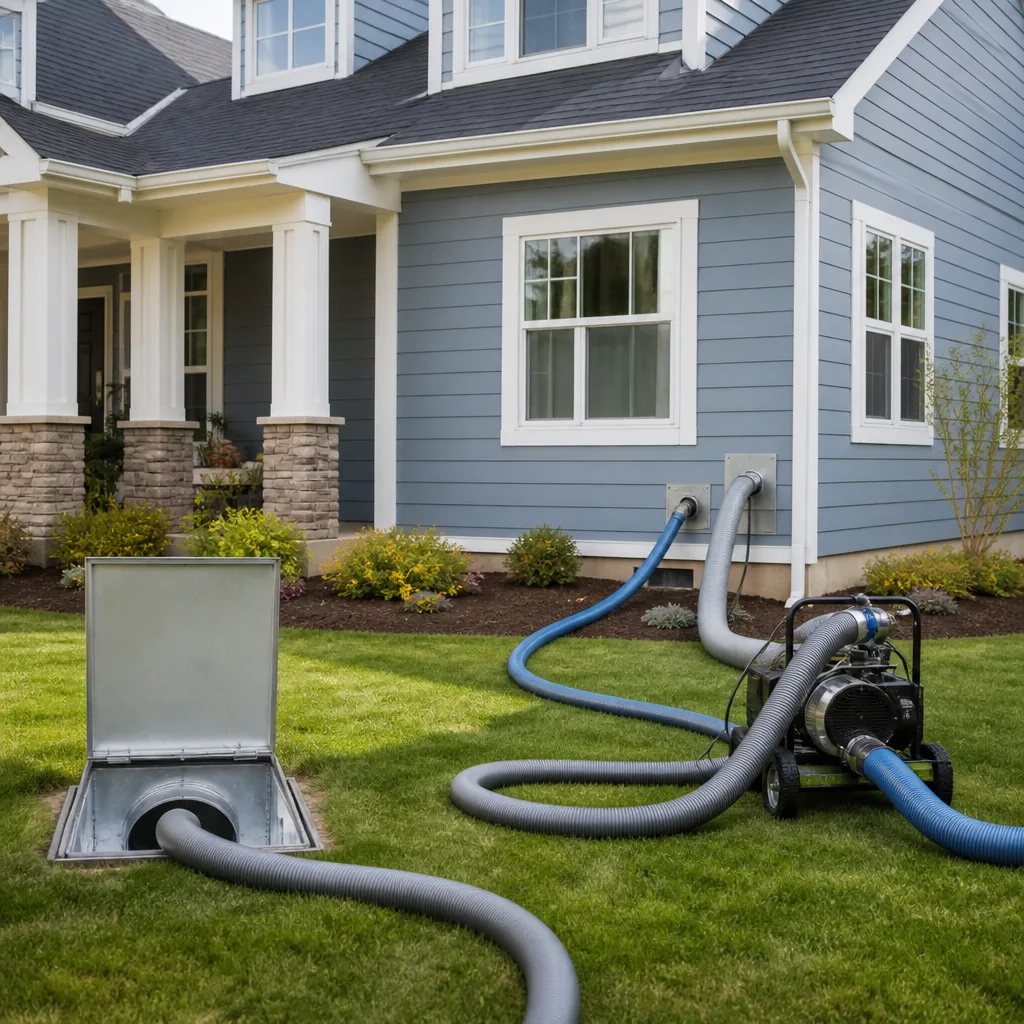 Whole-home duct cleaning
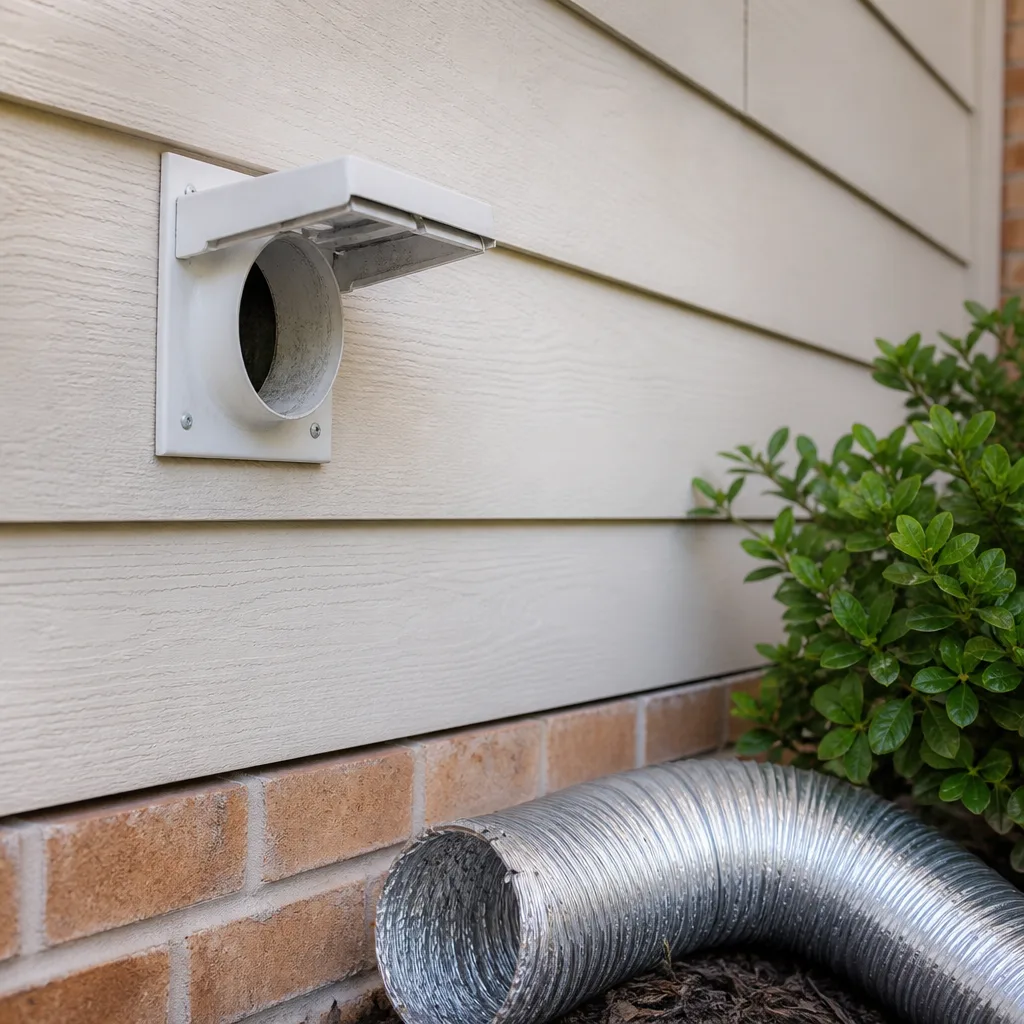 Dryer vent cleaning
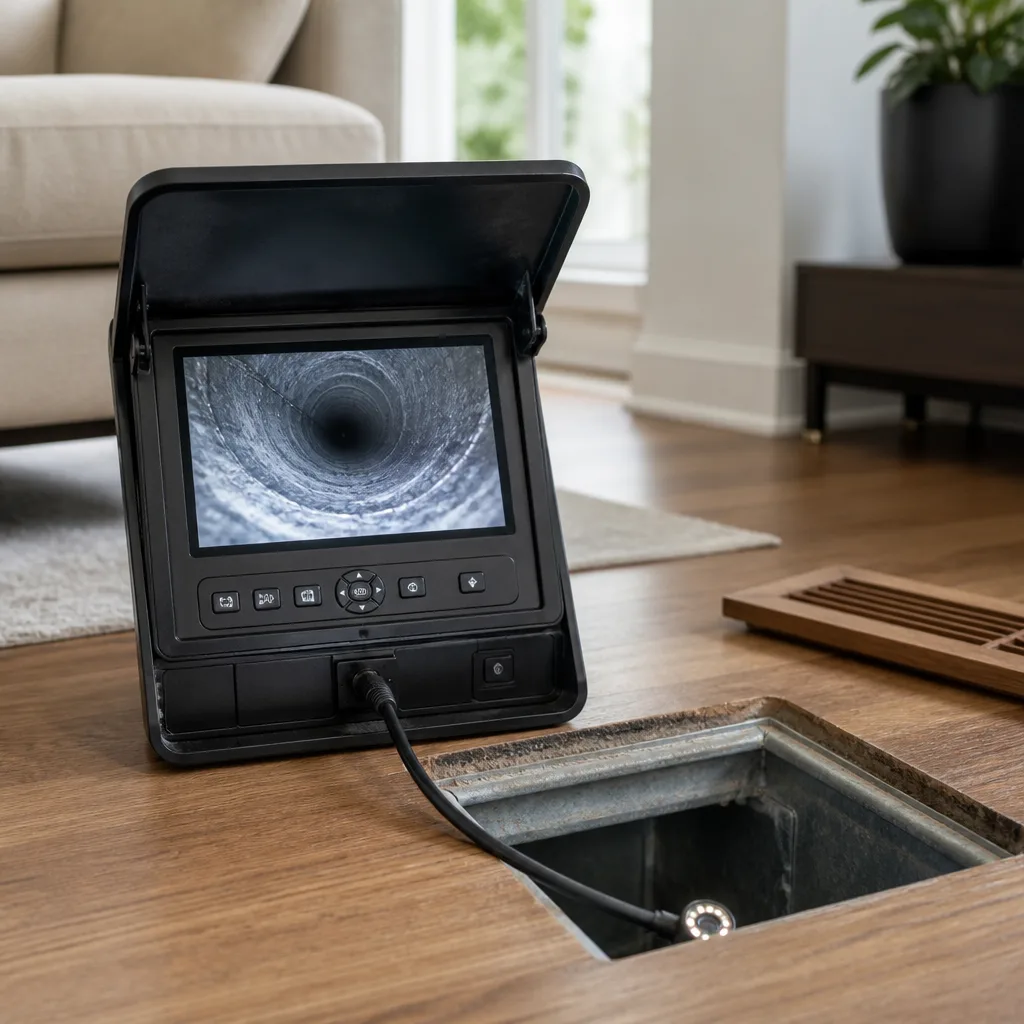 Camera inspection
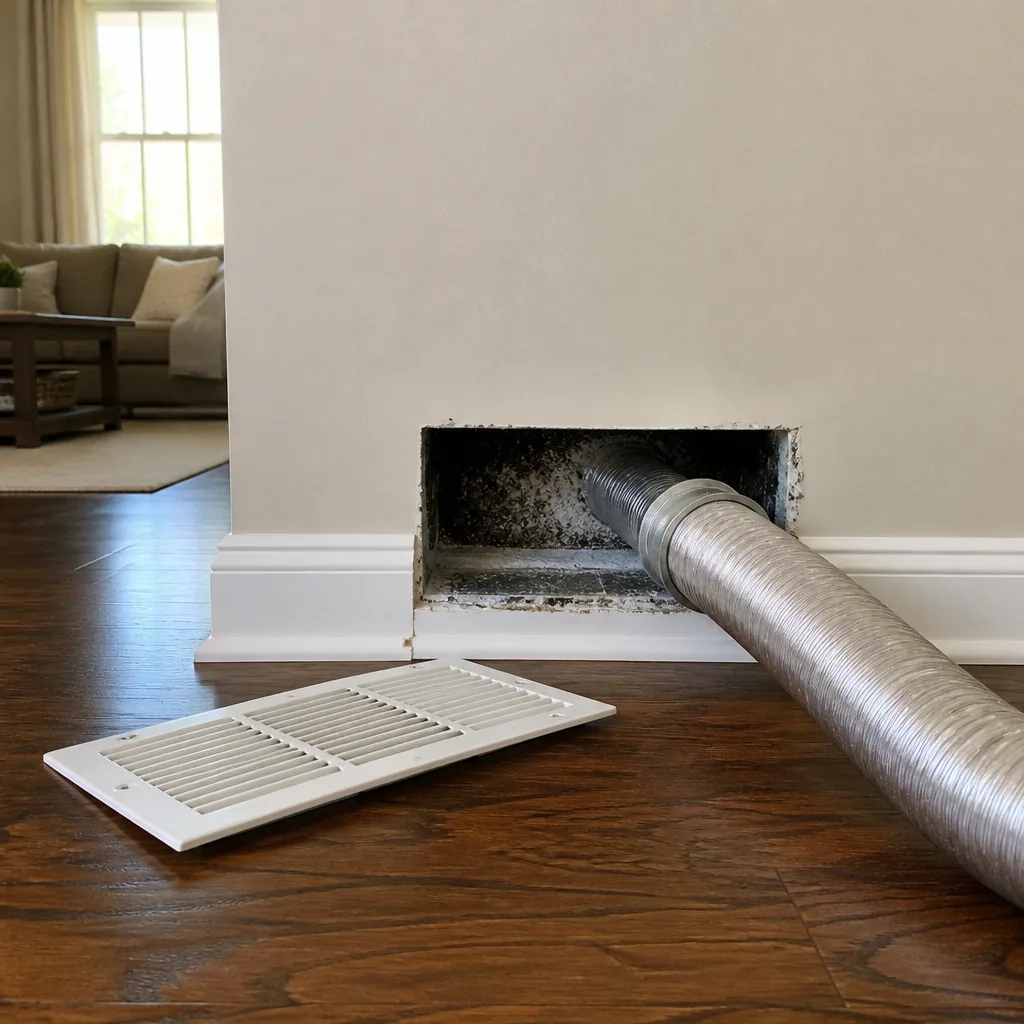 Sanitizing & deodorizing
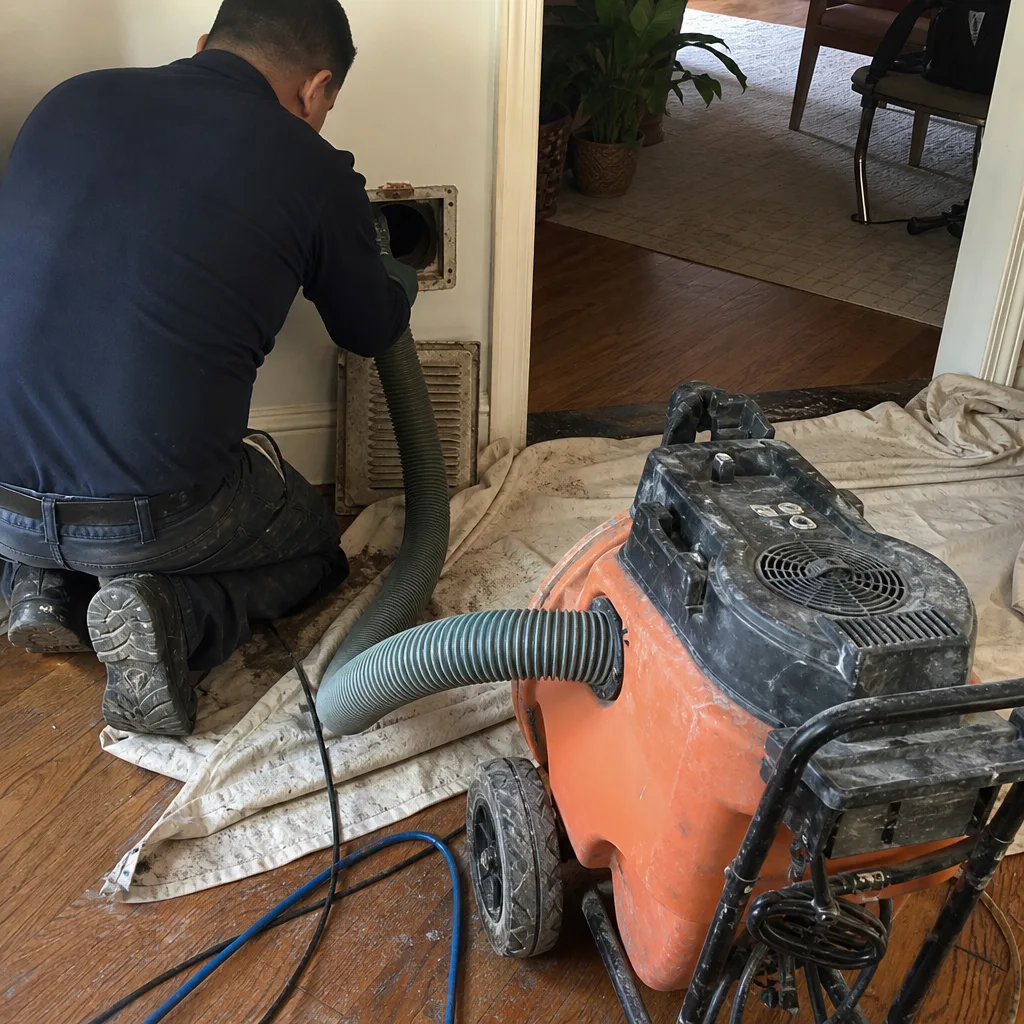
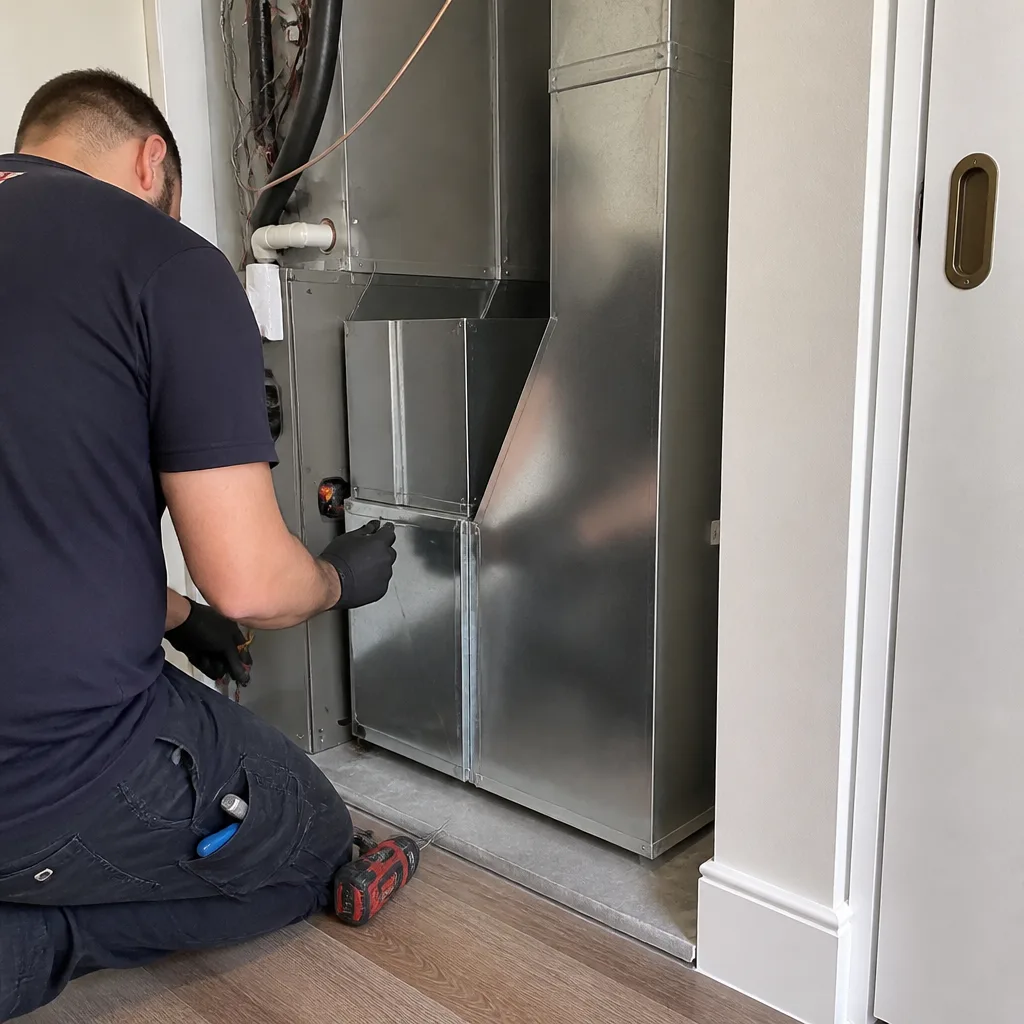
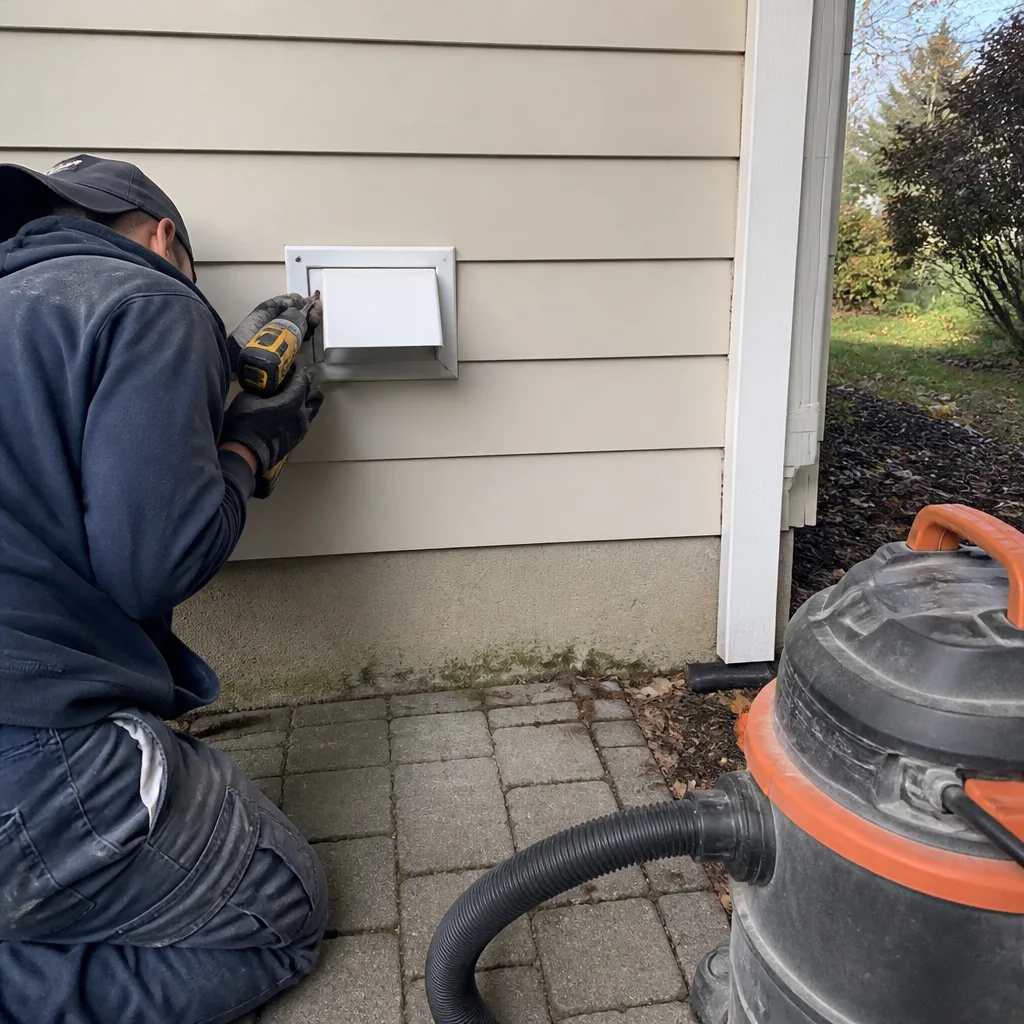
Whole-system duct and dryer vent check with before-and-after photos - you see exactly what came out of your vents
That "$99 whole-house special" is a bait ad - the real number appears once they are in your hallway, or the "clean" is a shop-vac at the register. We photograph the inside of your ducts before and after instead.
Air Duct Cleaning Cost Breakdown: The New York Homeowner’s Reference for 2026
In 2025, the most common air duct cleaning complaint in New York wasn’t bad work. It was a $149 advertised price turning into a $600 invoice by the time the technician finished adding “per-vent fees,” “sanitizer application,” and “access charges” that were never mentioned on the phone. This Air Duct Cleaning guide exists so you never sit through that conversation again. We’re going to walk through every real cost line in a New York duct cleaning job, show you what fair pricing actually looks like, and hand you the questions that force any contractor to give you a straight answer before they ever park the van.
Styles & brands we work with
Quick Answer
Air duct cleaning in New York typically costs between $350 and $650 for a full central forced-air system in a single-family home or apartment, based on flat-system pricing rather than per-vent fees. Co-op fan-coil units run lower, usually $175 to $325, while converted brownstones with mixed systems land between $400 and $800 depending on access and system layout. The single biggest factor in your final price is not the quality of the work. It’s whether the quote you received covers the entire system or is designed to multiply once the technician arrives.
Table of Contents
- Why Two Quotes for the Same Apartment Can Be $500 Apart
- Real Cost Ranges by System Type in New York
- What “Per-Vent Pricing” Actually Means in Dollars
- The Line-by-Line Cost Table for 2026
- Add-Ons Worth Paying For vs. Add-Ons to Decline
- What a Written Pre-Work Quote Must Contain
- How to Compare Two Quotes That Look Different on Paper
- Common Mistakes to Avoid
- When to Call a Professional
- Frequently Asked Questions
- The Bottom Line
Why Two Quotes for the Same Apartment Can Be $500 Apart
Here’s what most New York homeowners don’t realize: two companies can quote $200 and $700 for the identical three-bedroom apartment, and both of them are telling the truth about their own pricing model. The difference is rarely about skill, equipment, or how thorough the cleaning will be. It’s about what the quote actually covers, and what gets added once the work begins.
We’ve been cleaning ducts in New York since 2004, and in our experience the spread comes down to four things. First, the pricing structure itself: a flat whole-system price versus a low base rate plus per-vent charges that multiply quickly. Second, whether the quote includes the return side of the system or only the supply registers. Third, whether access panels, register removal, and basic equipment setup are line items or included. Fourth, whether the company quotes sanitizer application as standard or as an add-on at the visit.
A New York apartment with 14 supply and return registers can legitimately be quoted at $149 as a base rate by one company and $560 by another, and both are quoting the same physical job. The first company simply hasn’t told you how the $149 turns into $560 yet. That’s not a pricing difference. That’s a pricing tactic.
Real Cost Ranges by System Type in New York
New York housing stock isn’t one kind of building, and duct cleaning costs reflect that reality. The city contains single-family homes with central forced-air systems in neighborhoods like Riverdale and Bayside, high-rise co-ops with fan-coil units, and converted brownstones in places like Park Slope and Bed-Stuy where a century-old building got central air added floor by floor over decades. Each system type has its own labor reality and its own fair price range.
Central forced-air systems in single-family homes: $350 to $650. This covers a furnace or heat pump with full ductwork, typically 10 to 20 registers, one main return or several return drops, and a filter housing. The labor is straightforward but the duct runs are longer, which means more time on the hose work. Homes in Queens and Staten Island with this setup fall squarely in this range.
Fan-coil units in co-ops and condos: $175 to $325. Many Manhattan and western Queens co-ops use a fan-coil system rather than full ductwork. There’s no long duct network. Instead, a coil unit in the wall or ceiling pushes air through a short run or directly into the unit. The cleaning is faster, the access is usually simpler, and the system physically cannot hide the same volume of debris. A fair quote reflects that lighter scope.
Mixed systems in converted brownstones: $400 to $800. These are the jobs where a brownstone in Harlem or Crown Heights got a central system added in phases. You’ll see a modern trunk line serving one floor, an older flexible duct run serving another, and sometimes a mini-duct high-velocity system mixed in. Multiple access points, varied duct materials, and tight mechanical closets add labor hours. The price isn’t inflated. It’s honest accounting for a more complex job.
What “Per-Vent Pricing” Actually Means in Dollars
The per-vent model is the single most common source of the price shock New York homeowners describe. Here’s how it plays out in real numbers. A company advertises a $99 or $149 “whole home” special. What the fine print means is that the base price covers some portion of the work, typically the main trunk line only. Every supply register and return grille beyond the first few gets billed individually.
Take a typical three-bedroom New York apartment with 12 supply registers and 2 return grilles. At $35 per vent beyond the first two included in the base, that’s 12 additional vents times $35, or $420 in per-vent charges. Add the return grille fees, a filter replacement charge, and the sanitizer the technician recommends during the visit, and the $149 quote becomes $600 before tax. The homeowner never got a revised quote. They got a revised invoice.
Flat-system pricing is the alternative, and it’s the model Kestrel Air Duct New York home has used on every job since our founding in 2004. One price covers the entire system, every register, every return, the full cleaning, and the written guarantee. The price you approve in writing before we begin is the price on the invoice when we finish. No per-vent arithmetic, no door-step revisions, no add-ons introduced for the first time while the equipment is running.
The Line-by-Line Cost Table for 2026
Here’s what a fair duct cleaning invoice in New York should look like when it’s itemized honestly. These are the line items that actually reflect real work, with the typical range for each in the current New York market.
- Full-system inspection and access setup: $0 to $75. Reputable companies include this. If it’s a separate charge, it should be spelled out in the quote. Some New York buildings require specific access procedures, which adds minor time.
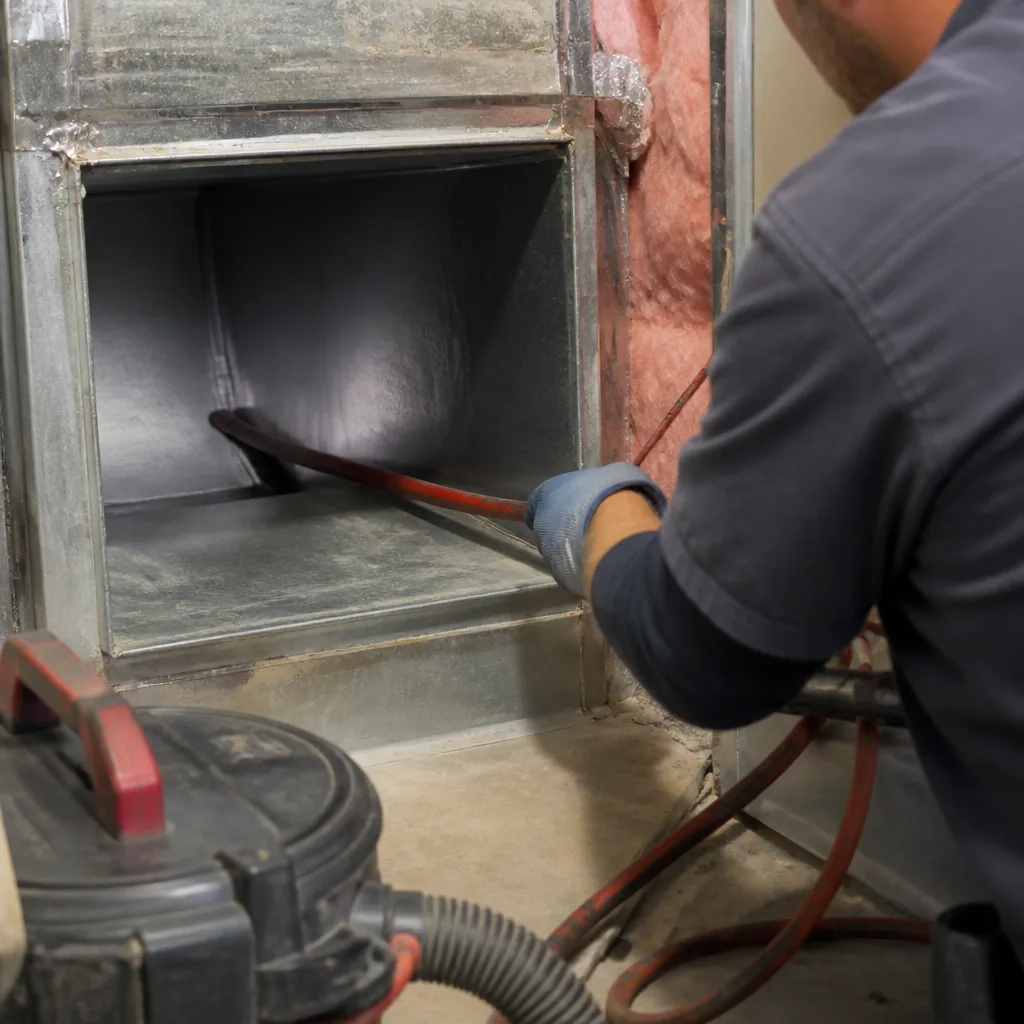
- Negative-air extraction setup: $75 to $150. This is the Nikro or equivalent negative-pressure unit connected at the plenum to pull loosened debris out of the system, keeping it from re-entering the living space. This is essential, not optional.
- Brush agitation, full duct run: $100 to $250. Rotobrush rotary brush systems dislodge debris at the duct wall, running from each register back to the trunk line. This is the mechanical loosening step that makes cleaning real rather than cosmetic.
- Supply register cleaning, per system: included in flat pricing. Under per-vent models, this is where the multiplication happens. A flat quote should cover every register.
- Return-side cleaning: included. If a quote itemizes return grilles separately, ask why. The return side is where the worst of the household dust accumulates.
- Sanitizer application (when warranted): $75 to $150. Only pay for this when there’s confirmed moisture, visible mold growth on register surfaces, or a documented musty smell from the vents. Not as a standard upcharge.
- Filter replacement: $10 to $40. This should be at cost or near cost, and it should be optional. Many New York homeowners already have a preferred filter spec.
- Total, typical 3-bedroom New York apartment: $350 to $600, flat.
- Total, typical single-family New York home: $450 to $650, flat.
If your quote doesn’t look like this, ask for the line items. A company that can’t explain what you’re paying for in plain English before the job starts is a company that’s planning to explain it after.
Add-Ons Worth Paying For vs. Add-Ons to Decline
Not every add-on is a trick. Some are legitimate work that addresses a real problem in your system. The skill is knowing which is which before you’re standing in your own hallway with a technician holding a tablet and an expectation.
Worth paying for:
- Sanitizer application when there’s confirmed moisture. If you’ve had a humidifier failure, a condensation leak, or visible microbial growth on a register, an EPA-registered sanitizer applied after the mechanical cleaning is real work. It’s not a magic product. It’s a targeted treatment for a diagnosed condition.
- Dryer vent cleaning bundled with duct cleaning. At Dryer Vent Cleaning in New York rates, a bundled dryer vent cleaning typically saves $50 to $100 off booking the services separately. It’s the same visit, the same access, and a real fire-safety upgrade for most homes.
- Access door installation for hard-to-reach duct runs. Some older New York systems have no access point near the coil or a trunk junction. Having a clean, sealed access door installed makes this cleaning better and every future one faster.
Usually not worth paying for:
- UV light installation upsold during a cleaning visit. A UV light system is a legitimate indoor air quality product, but it’s not a duct cleaning decision. It’s a separate purchase that deserves its own research, its own quote, and its own timeline. Anyone trying to fold it into a cleaning invoice is selling, not advising.
- “Deodorizer fogging” with no diagnosed odor problem. If your ducts don’t smell, don’t pay to make them not smell. This is the most common pure-margin add-on in the industry.
- Carpet cleaning, upholstery cleaning, or any non-duct service added during the visit. We clean ducts and dryer vents. That’s our entire service list. A company trying to double the invoice with unrelated work during a duct cleaning visit is telling you something about their business model.
What a Written Pre-Work Quote Must Contain
Here’s the single most important thing you can do as a New York homeowner before any duct cleaning: get the quote in writing, before the work starts, with enough specificity that the final invoice legally cannot exceed it. For help preparing, see our Air Duct Cleaning Maintenance Checklist for New York Homeowners. In New York, a written estimate that describes the scope of work is a document you can hold a contractor to. The key is making sure it actually describes the scope.
A proper written quote for Air Duct Cleaning in New York should contain:
- A flat total price. One number, not a price per vent, not a base rate, not a range with a “final price determined by system condition.”
- A system description. The number of supply registers, return grilles, and the system type. If the technician arrives and discovers more vents than the quote listed, that’s the company’s quoting error, not your surcharge.
- Every line item that could become a charge. Setup, extraction, brush work, filter replacement, sanitizer. If it’s not on the quote, it shouldn’t be on the invoice.
- A statement of what’s included at that flat price. “All registers, all returns, full duct run, full extraction” in writing.
- The guarantee in writing. What’s covered, for how long, and what you need to do to invoke it.
This is how the Kingswell Guarantee has worked at Kestrel since 2004. Every job gets a written price before work begins. The quote describes the entire system. The 365-Day Done Right Promise is printed on the document. If the work falls short within the guarantee period, we return and make it right at no charge. No phone call to a call center, no negotiation. The document says what happens, and that’s what happens.
How to Compare Two Quotes That Look Different on Paper
You’ve got a $299 quote and a $549 quote. The natural instinct is to book the $299 one. That instinct is what the per-vent model depends on. Here’s the step-by-step way to get both quotes to the same scope before you compare numbers.
- Ask each company for the flat price for your entire system. Every supply register, every return, the complete duct run. Write down the number they give you.
- Ask what’s not included in that number. Filter replacement? Sanitizer? Access panel work? Anything they name is a potential add-on. Add the cost of the items you actually want to the quote.
- Ask about the return side specifically. This is the most commonly “forgotten” part of a low quote. A company that only cleans the supply side has not cleaned your ducts.
- Ask what equipment they’re bringing. If the answer is “a truck-mounted vacuum” with no mention of negative-air extraction or brush agitation, you’re looking at a quote for a glorified vacuum job. Real cleaning involves a Nikro or equivalent negative-pressure unit and Rotobrush-style mechanical agitation. That equipment costs money to own and maintain, and it’s part of why a real quote is higher.
- Ask what the guarantee is, in writing, and what happens if it fails. If they can’t answer in one sentence, you’re comparing a real quote against a marketing number.
After those five questions, one of two things happens. Either the $299 quote comes up to something near the $549 quote, or the company can’t answer the questions at all. In both cases, you’ve learned what you needed to know before any work started.
Common Mistakes to Avoid
- Booking on the advertised number without asking what it covers. In New York, the $99 whole-home duct cleaning ad is almost always a lead generation number, not a service quote. Ask what the flat price is for your entire system before you book.
- Accepting a per-vent quote and not doing the multiplication. Count your registers. Multiply by the per-vent fee. Then decide. The math isn’t hidden. It’s just unpleasant.
- Paying for sanitizer without a diagnosed reason. If there’s no moisture history, no visible growth, and no odor, you’re paying for a product application that has nothing to treat. Save the money.
- Not checking whether the return side is included. A supply-only cleaning is a partial job at a full price. Every legitimate New York company includes the return side in a flat quote.
- Letting the technician rewrite the scope at the door. If the written quote says $450 flat and the technician arrives saying the system “needs more than expected,” the only correct responses are “do the job as quoted” or “leave.” The written price is the agreement.
- Skipping the dryer vent while the crew is already there. Lint buildup is a leading cause of dryer fires, and bundling the dryer vent cleaning with the duct work saves a second trip charge. It’s the rare add-on that’s genuinely cheaper to take than to decline.
- Not asking for the guarantee in writing. A verbal promise evaporates. A written guarantee with a named person, a covered period, and a defined remedy is a document you can act on. Get the document.
When to Call a Professional
Duct cleaning is not a DIY job, and it’s not a job you should hand to a handyman with a shop vac. For more guides & resources on proper cleaning methods, see our blog. Real cleaning requires negative-air extraction to pull debris out of the system rather than pushing it into your living space, and brush agitation to dislodge the material stuck to duct walls. That’s professional equipment and trained labor. Call a professional when you can see dust buildup on registers, when you’ve had renovation work that left drywall dust in the system, when there’s a persistent musty smell from the vents, or when it’s been more than five years since the last cleaning. The Kingswell Way values code governs every visit: say the price, show up in the window we gave, leave the place cleaner, put the guarantee in writing, come back if it fails. Kestrel Air Duct New York offers free estimates in New York, call (585) 517-2324.
Frequently Asked Questions
Most New York homes pay between $350 and $650 for a full flat-price central system cleaning in 2026, with co-op fan-coil units running $175 to $325 and mixed brownstone systems landing between $400 and $800. The range reflects real differences in system type, access difficulty, and duct run length, not differences in quality between companies. Call (585) 517-2324 for an exact quote on your system, estimates are free.
Cheaper quotes are almost always per-vent pricing structures with a low advertised base rate and multiplication applied after the technician arrives, while flat-price quotes cover the entire system at one number. The $149 quote for a 14-register apartment becomes $560 after per-vent fees and add-ons, which is not cheaper at all. Ask every company for the flat price for your entire system before you compare numbers.
Ask for before-and-after photos of your own ducts, specifically of the return side and the trunk line where buildup is heaviest, and expect the company to document their work with a written report. The 365-Day Done Right Promise from Kestrel means if the work falls short within the guarantee period, we return and make it right at no charge, with that promise printed on your job document. A company that won’t put a guarantee in writing is telling you how confident they are in their own work.
Every 3 to 5 years for most New York homes, though you should shorten that to every 2 to 3 years if you have pets that shed heavily, you’ve had renovation work done, or anyone in the household has significant dust allergies. New York apartment buildings with shared ventilation infrastructure can also pull in more corridor and neighboring-unit air, which accelerates buildup. More frequent cleaning than every 2 years is rarely justified unless a specific problem like a moisture event has occurred.
For most New York homes, yes, because it removes accumulated dust, pet dander, and debris from the air stream your family breathes every day, and it restores airflow that reduces strain on your HVAC system. The value is real when the cleaning is real: mechanical brush agitation plus negative-air extraction, not a vacuum hose waved at a register. A system that hasn’t been cleaned in a decade is circulating a decade of accumulated household dust.
Air duct cleaning addresses the HVAC ductwork that moves heated and cooled air through your home, while dryer vent cleaning addresses the exhaust duct that carries hot lint-laden air from your dryer to the outside, and the two are separate services with separate safety implications. Lint buildup in a dryer vent is a leading cause of dryer fires, and it’s a more urgent safety issue than dusty HVAC ducts. We offer both services under the same Kingswell Guarantee, and bundling them on one visit costs less than booking them separately.
The Bottom Line
Fair duct cleaning in New York costs between $350 and $650 for most homes, based on flat-system pricing that covers every register, the return side, and full mechanical cleaning with negative-air extraction. The quotes you see far below that range are not better deals. They’re per-vent arithmetic waiting to happen at your door. Get a flat price in writing. Confirm the return side is included. Check the equipment. Ask for the guarantee in writing. A company that can answer those four questions directly has nothing to hide, and a company that can’t is one you don’t want in your home. The Kingswell Guarantee has applied to every Kestrel job since 2004: written price before work begins, a defined arrival window, a clean job site, and a 365-Day Done Right Promise in writing. That’s what fair looks like.
Written by Dale Whitmore, Owner at Kestrel Air Duct New York, serving New York since 2004.
See the difference
 Before
 After
After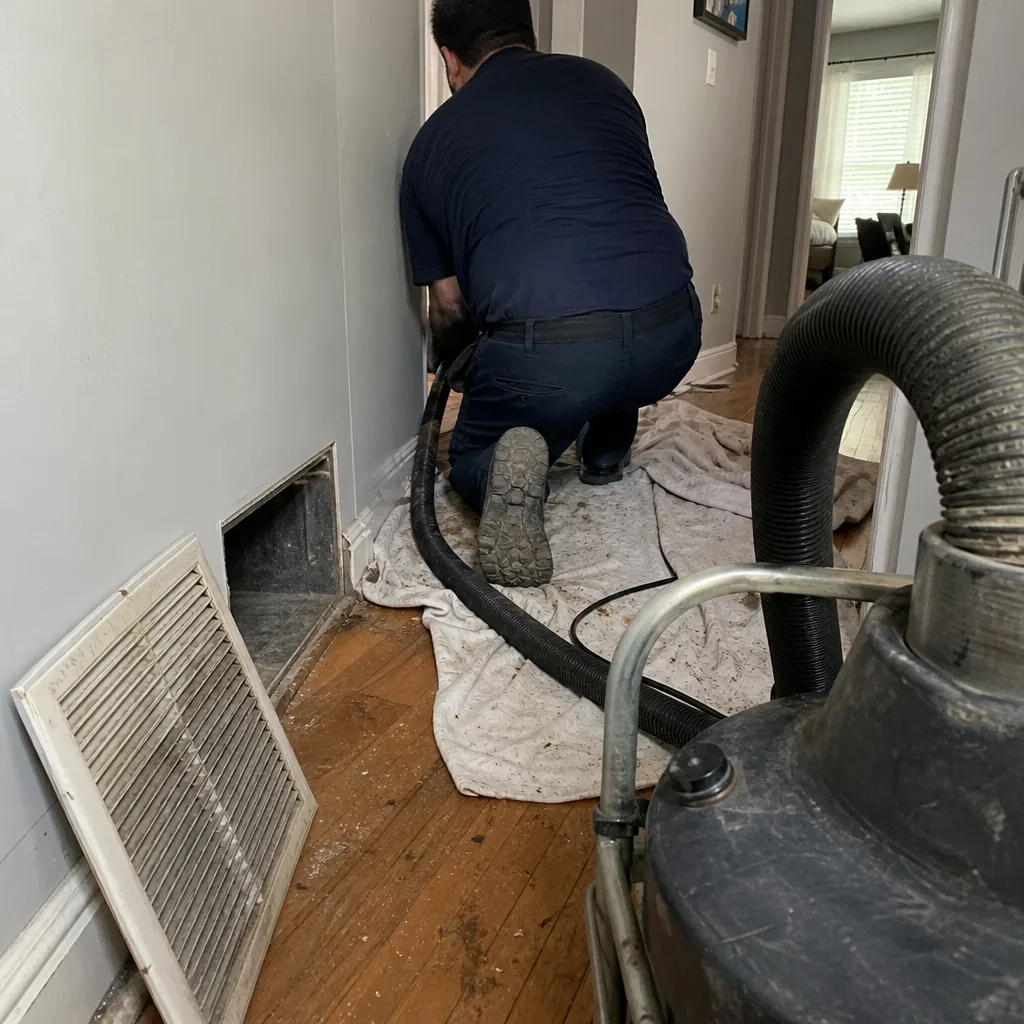 Before
 After
After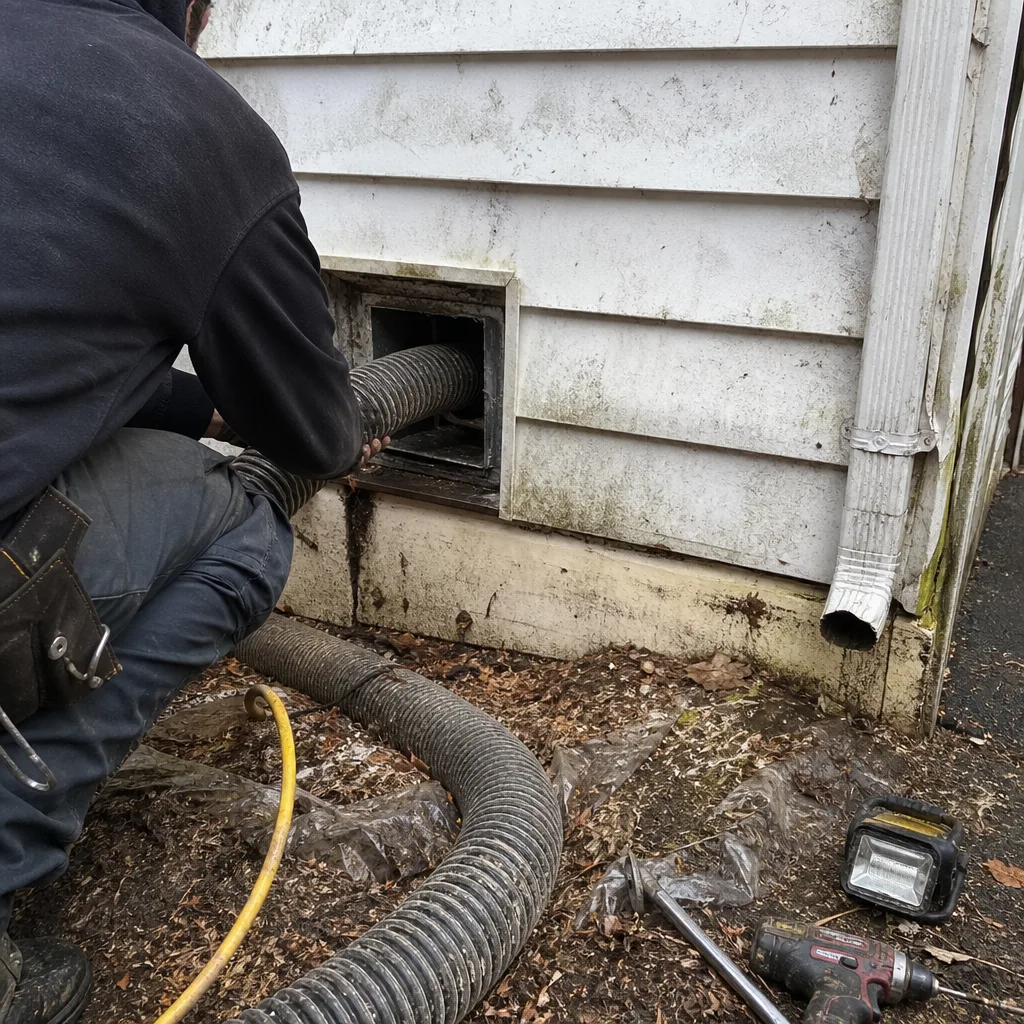 Before
 After
After